
极度深寒
Chinese film uses a kitchen to crush Hollywood’s war myth_我的网站

A |
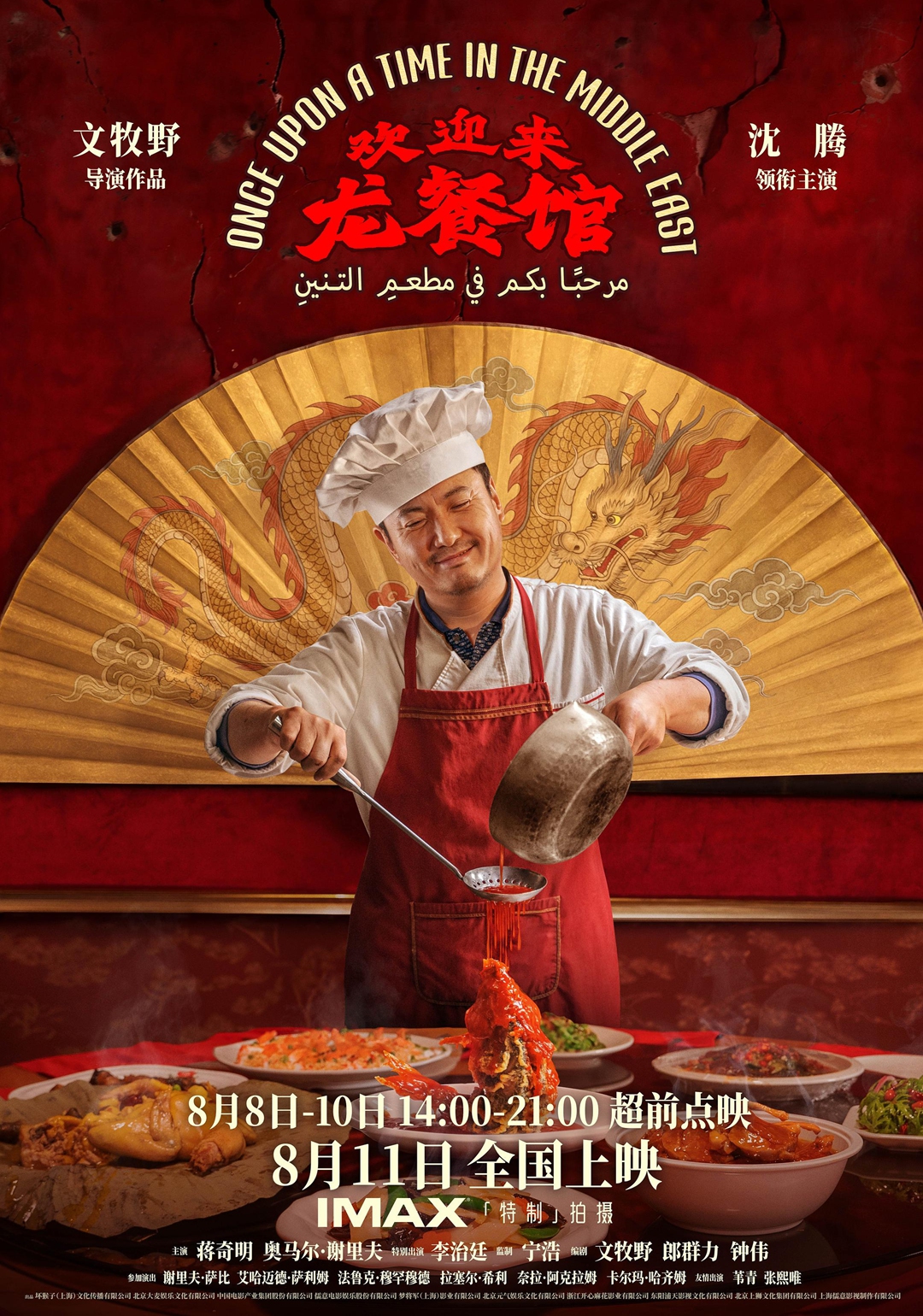
The excitement is understandable. Director Wen Muye has made something quietly radical: a war film that refuses spectacle.
There is a wedding scene in Once Upon a Time in the Middle East that stays with you long after the credits. In the middle of a war zone, people still find a way to dance, embrace, and cry as if tomorrow will never come. The joy is desperate and beautiful at the same time. Watching it, you feel the ache of a simple truth: These people should have been allowed every tomorrow. That single sequence captures what director Wen Muye has achieved. He has made a film that only a Chinese filmmaker could have made - because of a sensibility that refuses to treat war as spectacle or moral theater.
The commercial response in China has been equally striking. During the past weekend the film took in 373 million yuan ($55.35 million) at the box office, over 4 times the amount earned by Christopher Nolan's The Odyssey in the same market. Audiences walked out of the theater talking about war, food, and the value of ordinary life. The numbers confirm what the film itself demonstrates: a story told from the kitchen can still command a massive audience.
The story follows Xu Fu, an ordinary Chinese chef who travels to a Middle Eastern city (clearly modeled on Iraq around 2003) to work off family debt. With restaurant manager Ma Junsheng, he opens the Dragon Restaurant and serves Chinese food. Even after the invasion begins, the kitchen does not close. The kitchen becomes a fragile island where meals continue to be cooked while the war begins outside. Xu Fu is not a hero in a Hollywood sense. He does not pick up a gun or deliver speeches about freedom. He just keeps cooking.
What makes the film remarkable is how cleanly it rejects the familiar Western war narrative. Hollywood has spent decades following US soldiers into foreign cities, showing their courage, their trauma, and their brotherhood. Films like Saving Private Ryan and Black Hawk Down place the US experience at the center and often reduce the local population to a background threat or grateful recipients of rescue. Once Upon a Time in the Middle East turns the camera the other way around. It asks a blunt question spoken to an American officer: "Without you, where would the terrorists come from?" The line is not delivered as propaganda. It is offered as a practical observation about cause and effect. Violence creates more violence. Children who lose everything do not become extremists by nature; they do because the options for a normal life have been deprived.
The film makes this point through a recurring image: the knife. In Xu Fu's hands, a knife is a tool for chopping, flipping, and seasoning. It produces the bowl of "Xu Fu stew" that orphans finish and ask for more. In other hands, the same blade becomes a weapon. "The knife is not good or evil," the film suggests. "People are." The same logic applies to the children. Young Saif learns to cook under Xu Fu's guidance, kneading dough, controlling the flame, earning respect through a plate of food. Other kids the same age are packed into cars with bombs instead of books.
Here the Chinese director's approach proves smarter than the Hollywood model. Hollywood war films usually rely on scale, speed, and moral clarity: big battles, clear villains, and a central hero who grows through combat. The camera stays close to the soldiers, the soundtrack swells, and the audience is guided toward admiration or catharsis. Director Wen Muye does the opposite. He stays small, slow, and unresolved. By placing the story inside a kitchen rather than on the front line, he forces the viewer to confront the human cost without the distraction of heroic spectacle. Instead of telling us who is right, he shows us what is lost. This restraint is more demanding and ultimately more persuasive. It trusts the audience to connect the dots rather than feeding them a pre-packaged moral. Where Hollywood often ends with a sense of hard-won victory or noble sacrifice, this film leaves you with the quieter, harder realization that the real damage continues long after the shooting stops: in the minds of children and in the broken routines of daily life. That choice of focus is not just different; it is more honest and more intelligent.
This perspective feels especially Chinese in its emphasis on ordinary survival. Chinese culture has long treated food as the foundation of life: "Heaven is big, earth is big, but eating is bigger." The dishes in the film, from northeastern iron-pot stews mixed with local grilled fish to carefully prepared fried rice made from whatever ingredients remain, are not exotic decoration. They are the practical language of endurance. One of the most moving moments comes when Xu Fu cooks a simple stew for a group of orphans during their escape. What began as "leftovers not fit for the table" becomes a permanent item on the menu. Anything made with care can feed people. That idea carries more weight than any battlefield speech.
The film's approach to food and daily ritual reminds me of director Ang Lee's Eat Drink Man Woman. Lee used elaborate family dinners to reveal emotional truths that characters could not speak aloud. Wen transplants that same quiet method into a war zone. The kitchen becomes the moral center of the story. Steam, chopping boards, and shared tables matter more than explosions. In both films, cooking is never just cooking. It is a way of insisting that human connection still exists even when larger forces try to erase it.
A quiet but powerful metaphor runs through the story: the potato. A potato is harmless until it sprouts and becomes poisonous. The children radicalized by war are not born poisonous. They become so when the soil around them turns toxic. The film returns several times to the simple instruction "don't waste food." In peacetime the phrase sounds ordinary. In a war zone it becomes a statement about the waste of human lives. War does not only kill people; it spoils what could have been good.
By the final scenes, the Dragon Restaurant has become more than a business. It is a small example that another way of existing is possible. Children are learning to cook instead of learning to kill. The film does not claim this solves geopolitics. It simply shows that the most basic human desire, to eat well and live another day, remains the clearest common language across cultures.
The author is a reporter with the Global Times. [email protected]
。

B | 2026年8月26日,上海——继“海洋领航者号”(Navigator of the Seas)延长新加坡航季后,皇家加勒比游轮(以下简称“皇家加勒比”)再度加码亚洲市场,宣布“海洋航行者号”(Voyager of the Seas)将于2028年1月至2月以香港为季节性母港,推出多条航线,精准覆盖新春佳节与寒假出游旺季。届时,香港母港将迎来“海洋航行者号”与“海洋光谱号”(Spectrum of the Seas)双船部署,中国及亚洲宾客将有更多机会从这一区域游轮枢纽出发,探索多元目的地。即日起,相关航程全面开放中国市场预订。 “海洋航行者号”将于2028年1月至2月以香港为季节性母港 皇家加勒比游轮大中华区总裁兼亚洲区董事总经理博杰明(Benjamin Bouldin)表示:“亚洲拥有全球旅行者向往的绝美风光、特色美食与多元文化。我们始终相信香港是亚洲理想的国际游轮枢纽,随着‘海洋航行者号’的回归,她将与‘海洋光谱号’形成双船部署,为宾客带来比以往更丰富的香港母港航线选择。

C | 无论是与家人朋友共享的周末海上微度假,还是深入探索亚洲热门目的地的长线航线,抑或充满节日氛围的中国新年主题航次,两艘游轮都将为宾客提供更多元、更灵活的度假选择。” 香港旅游发展局总干事刘镇汉表示:“我很高兴并欢迎皇家加勒比游轮进一步扩大香港母港部署。继‘海洋光谱号’明年冬季继续以香港为母港营运外,更新增‘海洋航行者号’于2028年新春期间来港。

D | 为旅客带来‘只在香港’的节庆氛围及一系列精彩盛事活动的绝佳体验机会,同时也印证了香港作为区域游轮枢纽的吸引力,以及业界对香港游轮旅游发展前景的信心。

E | 旅发局将继续联同业界加强推广,吸引更多游轮旅客访港,进而推动更多游轮以香港为母港或到访香港,为香港旅游业持续注入动力。” “海洋航行者号”与中国市场渊源深厚。

F | 2012年,她首次抵达上海,成为当时亚洲母港运营的最大游轮之一,见证并推动中国游轮市场迈入“大船时代”。2014年起,她以香港启德游轮码头为母港运营,为香港游轮市场注入全新活力,也深化了皇家加勒比的本土布局。

G | 如今,这艘承载一代中国宾客记忆的标志性游轮历经全面升级与焕新,重返亚洲并以香港为母港开启全新航季,进一步彰显了皇家加勒比深耕中国市场、支持香港游轮枢纽发展的长期承诺。 多元航线覆盖亚洲热门目的地 围绕中国春节并连接寒假出游潮,“海洋航行者号”将以香港为母港推出4晚至10晚的多元航线。新春期间,宾客可选择4晚或5晚短航次,前往日本石垣岛及冲绳,部分航次更安排冲绳过夜行程,让宾客深度探索目的地的自然风光与在地文化。从香港出发的航程还将前往中国台北(基隆)以及越南顺化/岘港(真美港),宾客既可感受台北的都市魅力与地道美食,也可领略顺化古城的悠悠韵味,欣赏越南中部的滨海风光。追求深度体验的宾客则可选择最长10晚的长航线,串联多个亚洲特色港口,将繁华都市、历史地标、滨海风光与巍峨山景尽览于一次海上假期。 丰富海上体验让全家各得其乐 在目的地体验之外,“海洋航行者号”还为各年龄层宾客汇集丰富多彩的海上体验。热爱冒险的宾客可以挑战“甲板冲浪”(FlowRider)、“完美风暴”水滑道(The Perfect Storm)和攀岩墙,也可前往“真冰溜冰场”(Studio B)体验冰上乐趣。亲友可以在九洞迷你高尔夫球场“航行者沙丘”(Voyager Dunes)切磋球技,或在“镭射对决:星球Z之战”(Laser Tag: Battle for Planet Z)中展开一场荧光对决。儿童可在“海上历奇青少年中心”(Adventure Ocean)参加趣味活动,青少年则可在专属空间“客厅”(Living Room)结识新友、创造珍贵回忆。 餐饮方面,宾客可以在“吉瓦尼意式餐厅”(Giovanni’s Table)与亲友共享家庭式意大利料理,在“牛排烧烤餐厅”(Chops Grille)品尝手工切制牛排,在“泉·日式餐厅”(Izumi)探索寿司及日式风味,也可前往“帆船自助餐厅”(Windjammer)和“皇家大道咖啡馆”(Café Promenade)轻松享用休闲美食。从活力冒险和家庭时光,到精致餐饮、精彩娱乐和惬意休闲,“海洋航行者号”让每位宾客都能按照自己的方式享受海上假期。 双船部署深化亚洲市场布局 2027-2028航季,“海洋光谱号”将继续以上海和香港为母港运营,推出56条3晚至11晚的精选航线,覆盖亚洲22个热门目的地。其中,三条由香港出发的暖冬假日长航线——感恩节、圣诞节与新年航次,为宾客提供海上欢庆佳节的更多选择。宾客可以在感恩节航次中邂逅秋日绚烂风光,跟随圣诞节航次沉浸于浓郁的节庆氛围,更可以在新年航次体验冬季观鲸等季节性限定亮点,让每一次启航都满载难忘回忆。两艘游轮以香港为母港形成合力,从短途周末度假到假日长线探索,共同为宾客构建更加完善的航线网络。 2027-2028航季,“海洋光谱号”也将继续以上海和香港为母港全年运营 随着“海洋领航者号”延长新加坡航季、“海洋航行者号”重返香港母港、“海洋光谱号”继续以上海与香港为母港全年运营,2027-2028航季皇家加勒比将在亚洲市场部署四艘游轮,形成覆盖上海、香港、新加坡三大核心母港的强力矩阵,进一步巩固品牌在亚洲市场的领先地位。

H | 2027-2028航季皇家加勒比将在亚洲市场部署四艘游轮 依托不断拓展的亚洲网络布局,皇家加勒比将持续为中国消费者带来更多高品质、沉浸式的海外度假体验,让每一次海上旅程成为与亲友深度联结、值得长久珍藏的难忘回忆。与此同时,皇家加勒比也将持续丰富面向中国市场的海外度假产品组合,为旅行社伙伴引入更多优质航线与产品选择,携手把握亚太旅游市场的新机遇。返回,查看更多。
Current article:http://uj19ke.guaxiazaopinduan.cfd/4f92/20260826/4165.html
Published on:10:30:10